
Cover Songs Better Than the Original: 12 That Prove It

A cover song surpasses its original when the new arrangement changes the emotional register of the piece, not just the singer performing it. That happens through slower tempo, a genre swap, a different vocal delivery, or a live arrangement that reveals something the studio version buried. The examples below show exactly how that transformation works, song by song.
Key Takeaways
A cover song is judged as "better" through a mix of critical consensus, chart or cultural impact, and how much the new arrangement changes tempo, genre, or emotional weight, not personal nostalgia alone.
Genre-shifting covers, moving a song from punk to industrial or from rock to soul, tend to generate the strongest "better than the original" reactions because the transformation is audible within seconds.
Industry data cited by wedding-industry sources shows 60% of Texas couples include live music in their reception, and pop songs account for roughly 40% of processional song choices, according to 2026 wedding-industry reporting.
Live and unplugged performances often outperform studio covers in emotional impact because the arrangement is stripped down and the vocal takes center stage.
For couples and event planners in Austin, Dallas, Houston, San Antonio, and Denver, understanding why certain covers land helps you communicate song requests clearly to a live band instead of just naming a title.
At Uptown Drive, we get asked constantly to play a "cover, but the good version," meaning the arrangement that changed how a song feels, not just who's singing it. Couples request this for first dances and processionals. Corporate planners request it for the moment right before an award announcement. Understanding what actually separates a forgettable cover from one people remember for decades helps you make better requests, whether you're booking a Texas wedding or building a corporate gala set list for 2026.
This list draws on critical consensus from major music publications, chart and cultural impact, and the specific arrangement choices that made each cover land. We're explaining the mechanics: what changed in tempo, instrumentation, vocal delivery, or genre, and why that change worked. As a band that performs choreographed sets across Texas and Colorado, we think about these mechanics every time we build a set list, because the difference between a flat cover and a showstopper usually comes down to one or two specific arrangement decisions.
What Is Considered the Best Cover Song Ever?
Johnny Cash's 1994 recording of "Hurt," originally written and performed by Nine Inch Nails, is widely cited by music publications as the best cover song ever recorded, largely because of Cash's stripped-down piano arrangement and his delivery, recorded near the end of his life, which shifted the song's meaning entirely.
The original Nine Inch Nails version, industrial and distorted, is a young man's song about self-destruction. Cash's version, just voice and piano, turns the same lyrics into a meditation on mortality and regret. The tempo barely changes, but the instrumentation strips away every layer of distortion, leaving nothing between the listener and the words.
A similarly transformative example is Nirvana's live cover of David Bowie's "The Man Who Sold The World," recorded during the band's 1993 MTV Unplugged session. That performance shows a different transformation mechanism: raw, unpolished vocal delivery replacing Bowie's glam-rock theatricality with grunge-era vulnerability. Both examples show the best covers change what a song means, not just how it sounds.
What Makes a Great Cover Version Better Than the Original?
A cover version becomes better than the original when a deliberate arrangement decision changes the song's emotional register, rather than vocal ability alone driving the difference. The strongest covers alter tempo, genre, instrumentation, or vocal phrasing, and the change reveals something the original arrangement obscured. As a result, listeners often experience a familiar song as an entirely new emotional statement.
Joe Cocker's 1968 version of "With a Little Help from My Friends" is the clearest example of genre transformation. The Beatles wrote the song as a light, singalong pop tune. Cocker's version slows the tempo dramatically, adds a soul and gospel-inflected horn arrangement, and replaces the original's conversational vocal with a raw, gravel-voiced delivery that turns the song into what Paul McCartney himself described as a "soul anthem." McCartney has publicly called the reinterpretation "mind-blowing."
Aretha Franklin's 1967 recording of "Respect," originally written and recorded by Otis Redding a year earlier, demonstrates how a lyrical and structural rewrite can shift a song's meaning entirely. Franklin added the now-famous "R-E-S-P-E-C-T" spelling breakdown and the "sock it to me" backing vocals, turning a blues plea into a declaration. NPR lists "Respect" among the definitive examples of a cover eclipsing its source. The Franklin recording became more culturally significant than Redding's original, which few casual listeners even know exists.
For couples building a reception set list with a live band, this distinction matters practically. When you request a song, specifying whether you want the original tempo and arrangement or a reimagined version changes what the band delivers. We always ask couples this directly before finalizing a set list, because "play Respect" means something different depending on which arrangement you have in mind.
What Are Some Songs Considered Better Than the Original Version?
Several cover songs are widely considered superior to their original recordings based on critical consensus, chart performance, and lasting cultural presence. The list below names twelve specific covers, their original performers, and the arrangement change that made each one land.
1. "Hurt" by Johnny Cash (originally Nine Inch Nails)
Cash recorded this in 2002 with producer Rick Rubin, swapping heavy distortion for a single piano and his aging, weathered voice. The tempo stays close to the original, but the emotional weight shifts from youthful despair to a dying man's reckoning.
2. "The Man Who Sold The World" by Nirvana (originally David Bowie)
Recorded live during the 1993 MTV Unplugged session, Kurt Cobain's version trades Bowie's theatrical glam delivery for a stark, almost frightened vocal performance over acoustic guitar. This is a live, unplugged performance, not a studio cover, which matters when you're deciding which version to request.
3. "With a Little Help from My Friends" by Joe Cocker (originally The Beatles)
Cocker's 1968 version slows the tempo and adds a horn-driven soul arrangement, turning a pop singalong into what McCartney called a soul anthem. This is the textbook genre-shift cover: pop to soul, casual to urgent.
4. "Respect" by Aretha Franklin (originally Otis Redding)
Franklin rewrote the structure, added backing vocals and the spelling breakdown, and turned Redding's 1965 blues number into a 1967 cultural landmark. The song became more culturally significant than the original, which few casual listeners even know exists.
5. "All Along the Watchtower" by Jimi Hendrix (originally Bob Dylan)
Hendrix's 1968 version adds electric guitar layering, a driving rhythm section, and psychedelic production that Dylan's stripped-down folk original never had. Dylan himself has performed live versions modeled after Hendrix's arrangement since, an unusual case of the original artist adopting the cover's approach.
6. "I Want to Hold Your Hand" by Al Green (originally The Beatles)
Al Green's soul reinterpretation of the Beatles classic slows the tempo considerably and replaces the original's upbeat pop energy with a smoldering, string-laden arrangement. As a result, the song's core identity shifts from teenage excitement to mature romantic longing, an example of how genre alone can transform a familiar melody into something that feels newly written.
7. "Nothing Compares 2 U" (as performed by Sinead O'Connor, written by Prince)
Prince wrote and originally recorded "Nothing Compares 2 U" with his side project The Family. Sinead O'Connor's stripped-down, string-backed version, in contrast, brought raw vocal vulnerability to lyrics that Prince's original arrangement kept more restrained. O'Connor's recording remains one of the most commercially successful reinterpretations on this list, illustrating how minimal instrumentation can amplify emotional intensity rather than diluting it.
8. "Me and Bobby McGee" by Janis Joplin (originally written by Kris Kristofferson)
Kris Kristofferson wrote "Me and Bobby McGee," but Janis Joplin's posthumously released 1971 recording became the definitive version of the song. Joplin's vocal delivery, raspier and looser than Kristofferson's, carried the song to far greater cultural recognition. This is a notable example where the songwriter's own recording never approached the cultural weight that the cover version ultimately achieved.
9. "Don't Let Me Down" by Marcia Griffiths (originally The Beatles)
Griffiths reimagined the track through a reggae arrangement, changing the rhythmic foundation entirely, moving a British rock song into Jamaican reggae phrasing and instrumentation.
10. "Smooth Criminal" by Alien Ant Farm (originally Michael Jackson)
The 2001 nu-metal reinterpretation replaces Jackson's funk-pop groove with distorted guitars and a faster, more aggressive rhythm section. Yahoo identifies this as one of the clearest examples of a rock band successfully translating a pop original into a different genre without losing the song's hook.
11. "Hallelujah" as performed by Rufus Wainwright (originally written by Leonard Cohen)
Cohen wrote and recorded the original in 1984, and Jeff Buckley's 1994 cover is the most commonly cited version. But a notable BuzzFeed reader survey specifically found audience preference for Wainwright's interpretation, which uses a fuller, more orchestral arrangement compared to Buckley's stripped guitar-and-voice approach.
12. "Ain't No Sunshine" reinterpreted through countless soul and jazz arrangements (originally Bill Withers)
Withers' 1971 original is already considered a classic, but the song has been reinterpreted so often that it's become a benchmark for how a slower tempo and a horn or string arrangement can add gravity to an already strong composition. This is the example we reference most often with couples deciding between an upbeat and a stripped-down arrangement for a first dance.

Which Covers of Songs Were More Popular Than the Originals?
A cover becomes more popular than its original when the reinterpretation achieves greater chart performance, more radio and streaming longevity, or wider cultural recognition than the source recording, even if the original came first and the cover artist did not write the song. This differs from being "better" critically. Popularity is measurable through sales, chart position, and lasting airplay, while critical superiority is a matter of arrangement and interpretation.
"Respect" by Aretha Franklin is the clearest case: Otis Redding wrote and recorded the song first in 1965, but few casual listeners today associate the song with anyone but Franklin. The same pattern applies to "All Along the Watchtower." Dylan wrote the song and released it in 1967, but Hendrix's 1968 version is the one played on classic rock radio decades later, and it's the version most cover bands, including ours, default to when a client requests the song without specifying otherwise.
For live wedding music specifically, this distinction matters. According to 2026 wedding-industry data, roughly 40% of processional song choices are pop songs, and 8 in 10 couples specify the exact version or timing of their ceremony songs. As a result, when a couple requests "Hallelujah," a professional band needs to know immediately whether they mean the Cohen original tempo, the Buckley arrangement, or something closer to Wainwright's fuller sound, because each version changes the room's mood differently as the bride walks down the aisle.
How Do Live and Unplugged Cover Performances Differ From Studio Covers?
Live and unplugged cover performances strip away studio production layers, forcing the arrangement to rely on vocal delivery and instrumentation choices rather than overdubs or effects. This format category is frequently overlooked in cover-song rankings, even though several of the most celebrated covers exist specifically because of that stripped-down live context, including Nirvana's MTV Unplugged rendition of "The Man Who Sold The World."
Television and broadcast covers add another layer of constraint. Sessions recorded for programs built around live performance rely on a single take, minimal editing, and often a smaller backing arrangement than a full studio recording would use. As a result, that constraint tends to expose a vocalist's raw ability in a way a heavily produced studio track cannot hide behind.
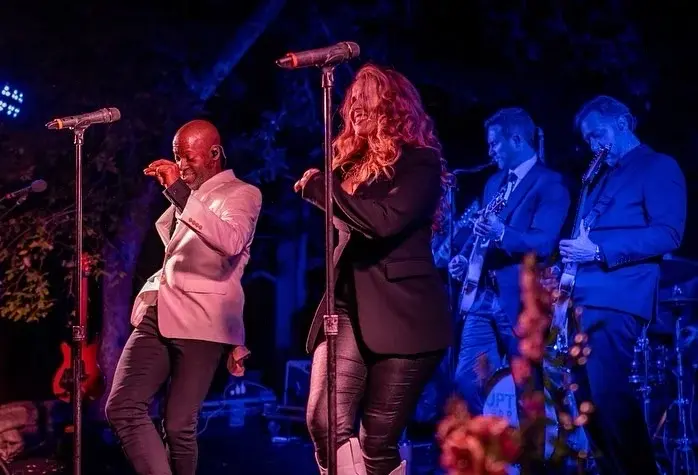
If you're booking live entertainment in 2026, this distinction should shape how you brief your band. A live, in-the-room cover of a well-known song will never sound identical to the studio or unplugged version you've heard on a playlist, and that's the appeal, not a flaw. At Uptown Drive, our choreographed sets are built specifically for this live context: horn-driven arrangements adapt in real time to the room's energy, something a backing track cannot replicate. If you want to hear the difference a trained lineup makes to a familiar song, our Austin wedding band page walks through how we build a live set around a couple's specific requests.
Cover Song Comparison: Original vs. Reinterpretation
The comparison table below tracks documented arrangement shifts across eight of the covers named in this article, pairing each cover version with its original performer or writer, the genre shift involved, and whether the recording was a studio production or a live/unplugged performance. For example, Johnny Cash's "Hurt" moved from Nine Inch Nails' industrial sound to a stripped acoustic studio arrangement, while Nirvana's "The Man Who Sold The World" shifted David Bowie's glam rock into grunge during a live, unplugged setting. Use this table to quickly compare genre transformations across studio versus live formats before requesting a specific arrangement from a band.
Cover Version | Original Performer/Writer | Genre Shift | Format |
"Hurt" (Johnny Cash) | Nine Inch Nails | Industrial to stripped acoustic | Studio |
"The Man Who Sold The World" (Nirvana) | David Bowie | Glam rock to grunge | Live/Unplugged |
"With a Little Help from My Friends" (Joe Cocker) | The Beatles | Pop to soul | Studio |
"Respect" (Aretha Franklin) | Otis Redding | Blues to soul anthem | Studio |
"All Along the Watchtower" (Jimi Hendrix) | Bob Dylan | Folk to psychedelic rock | Studio |
"I Want to Hold Your Hand" (Al Green) | The Beatles | Pop to soul | Studio |
"Smooth Criminal" (Alien Ant Farm) | Michael Jackson | Funk-pop to nu-metal | Studio |
"Don't Let Me Down" (Marcia Griffiths) | The Beatles | Rock to reggae | Studio |
How Should You Request a Cover Song Version for Your Wedding or Event?
Requesting a specific cover arrangement for a wedding or corporate event means naming both the song and the version you have in mind, since most well-known covers exist in multiple recorded forms with different tempos and instrumentation. A vague request like "play something like Hallelujah" forces a band to guess, which risks a mismatch during a moment as significant as a first dance or a processional.
Name the specific artist version you're referencing, not just the song title. Tell your band whether you want the tempo faithful to that recording or adapted for your room size and dance floor energy. If you're unsure which version fits your moment, ask your band leader directly; a good band will have opinions.
We built our booking process around this exact problem. At Uptown Drive, every couple works through a request list before the event, and Greg Williams, our founder who trained at the Indiana University Jacobs School of Music, personally reviews arrangement choices for first dances, processionals, and reception moments. That saxophone and horn-section background means our choreographed lineup can rearrange a familiar cover on the fly to match a room's acoustics, something a backing track or a laptop-based DJ setup can't replicate. If you're comparing what type of wedding music should i have, live arrangement flexibility is the single biggest advantage a trained band offers over recorded playback.
For corporate events, the same logic applies to entrance music, award moments, and after-dinner sets. Planners across Houston, Dallas, and San Antonio increasingly request genre-shifted covers, like a gospel arrangement of a pop hit or a big-band take on a modern single, because it signals a more polished, curated production than a standard playlist. Our Corporate Event Entertainment team builds these arrangements specifically around a company's brand and audience.

What Common Mistakes Do Couples and Planners Make With Cover Song Requests?
The most common mistake couples and event planners make is requesting a song by title alone without specifying the arrangement, leaving the band to guess between a faithful cover and a reimagined version. This single gap causes more rehearsal friction than any other planning detail we see across hundreds of bookings.
Not naming the reference version. "Play Hallelujah" could mean Cohen's original, Buckley's stripped guitar cover, or Wainwright's fuller orchestral take. Always name the artist you're referencing.
Assuming every band can replicate a genre shift on request. A punk-to-industrial or pop-to-gospel transformation requires specific instrumentation. Ask your band directly what genres and shifts they can execute live, not just what songs they know.
Overloading the set list with only well-known covers. A set built entirely from famous cover versions can feel like a jukebox rather than a curated night. Mix in a few surprising choices.
Ignoring venue acoustics when choosing arrangement style. A stripped-down unplugged arrangement works beautifully in a small ballroom but can get lost in a large outdoor Hill Country venue without amplification planning.
Booking too close to the date. Peak-season Saturdays from May through October carry premium pricing and require booking 12 to 18 months out for in-demand Texas bands, according to industry booking data.
Wedding coordinators and venue managers who work with us regularly recommend finalizing arrangement requests at least eight weeks before the event date, giving a choreographed lineup enough rehearsal time to nail a genre-shifted version. If you're still deciding on overall reception sound, our guide on the best songs played at weddings in Texas for 2026 covers broader song selection strategy beyond cover-specific choices.
Frequently Asked Questions
What are the most popular love songs from the 1950s?
1950s love songs are generally remembered for doo-wop and early rock and roll ballads built around simple vocal harmonies, close harmony group singing, and slow tempos, a style that later inspired countless soul and pop covers. Many couples request modern reinterpretations of this era's sound, since a live band can update the tempo and instrumentation while keeping the original melody intact for a first dance.
What is considered the best cover song ever?
Johnny Cash's version of "Hurt," originally by Nine Inch Nails, is widely named the best cover song ever by publications including NME, largely because the stripped piano arrangement completely shifted the song's emotional meaning near the end of Cash's life.
What makes a cover better than the original?
A cover surpasses its original when it changes tempo, genre, instrumentation, or vocal phrasing in a way that reveals new emotional depth, not simply through a different singer performing the same arrangement. Genre shifts, like pop to soul or rock to reggae, tend to produce the most dramatic and memorable transformations.
Can a live wedding band recreate a genre-shifted cover version?
A trained, multi-genre live band can recreate genre-shifted covers if the lineup includes the right instrumentation, such as horns for a soul arrangement or strings for an orchestral reinterpretation. Uptown Drive's choreographed lineup spans pop, hip hop, gospel, big band, and rock specifically so it can execute these arrangement changes live rather than relying on a backing track.
How far in advance should I request a specific cover arrangement for my wedding?
Most bands, including Uptown Drive, recommend finalizing specific cover arrangement requests at least eight weeks before the event to allow adequate rehearsal time, especially for genre-shifted or unplugged-style versions. Peak wedding season in Texas runs May through October, and popular bands are often booked 12 to 18 months ahead, so lock in your date early even if song details come later.
Does Uptown Drive travel outside Texas to perform cover songs at weddings and corporate events?
Yes, Uptown Drive is based in Austin, Texas, but performs for weddings and corporate events across Dallas, Houston, San Antonio, and Denver, Colorado, and travels nationally for destination bookings. The band builds its choreographed set list around each client's specific song and cover-version requests regardless of location.
What's the difference between a cover band and a Certified Original Lineup band?
A standard cover band typically plays through a fixed set list with limited genre range. A Certified Original Lineup format, like the one Uptown Drive performs under, features a rehearsed, choreographed lineup trained to execute genre shifts and custom arrangement requests live. This distinction matters most when a couple wants a specific reimagined version of a song rather than a generic run-through.
Conclusion: Choosing the Right Cover for Your Moment
The covers that outlast their originals share one trait: a deliberate arrangement decision that changes what the song means to a listener, whether that's Cash's stripped piano on "Hurt," Cocker's horn-driven soul reworking of a pop song, or Franklin's structural rewrite of "Respect." Knowing this helps you request music with precision instead of guessing at a title and hoping the band interprets it the way you imagined.
Whether you're planning a wedding reception in Austin, a corporate gala in Denver, or a private celebration anywhere across the Texas Triangle, the same principle applies in 2026: specify the version, trust a band with the genre range to execute it, and give them time to rehearse the transformation properly. Uptown Drive builds every set list around exactly this kind of precision, matching arrangement choices to the room, the moment, and the couple or company booking the performance.

If you want to hear how a choreographed, multi-genre lineup handles a genre-shifted cover request live, not a backing track, get started with Uptown Drive and tell us your must-play list. We'll help you decide which version of a song actually fits your first dance or your corporate gala's biggest moment.
Written by Greg Williams, Owner & Band Leader at Uptown Drive
Content powered by inkSTR.co


Comments