
Instrumental Wedding Processional Songs: A Complete Guide
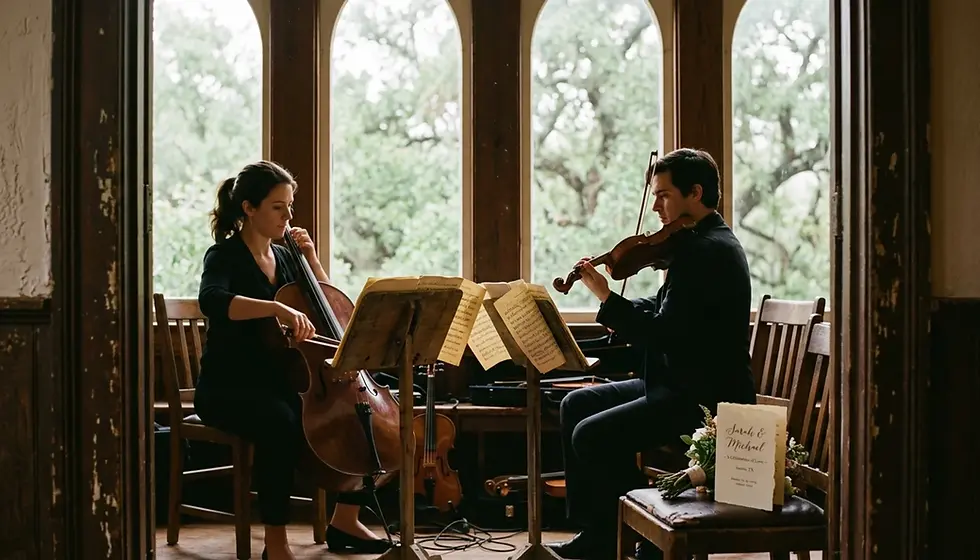
Instrumental wedding processional songs are arrangements without vocals, typically for piano, guitar, violin, or a small ensemble, played during the bridal party or bride's entrance so the music supports the moment instead of competing with it. Couples in 2026 are choosing them more often because instrumental versions keep guests focused on the walk itself rather than song lyrics.
Key Takeaways
A typical processional walking pace falls between 60 and 80 beats per minute, which should guide song selection and any tempo adjustments a musician makes on the day.
Classical pieces like Canon in D by Johann Pachelbel and Air on the G String by J.S. Bach remain the most requested processional choices, alongside instrumental covers of contemporary songs like Perfect by Ed Sheeran and All of Me by John Legend.
Streaming data shows strong demand for curated instrumental collections: The Knot's Instrumental Wedding Processional Songs playlist on Spotify has logged 916 saves and runs 42 minutes 37 seconds, while a broader Best Wedding Instrumentals 2026 playlist has accumulated 59,610 saves.
Live musicians can adjust tempo in real time, slowing or extending a piece to match an unpredictable aisle length, something a fixed recording cannot do.
Ceremony music should sit at roughly 60 to 70 percent of conversational speech volume so the officiant remains clearly audible over the arrangement.
Uptown Drive, based in Austin, Texas, builds custom instrumental sets for ceremonies across Austin, Houston, Dallas, San Antonio, and Denver, Colorado, adjusting arrangements live rather than relying on a static track.
If you're planning a ceremony in Austin, Houston, Dallas, San Antonio, or anywhere in Texas, you've probably already searched for a processional song and found the same fifteen-track streaming playlists everyone else is using. That's a fine starting point. But choosing the right instrumental arrangement involves more than picking a pretty melody; it involves timing your walk, matching your venue's acoustics, and deciding whether a recording or a live musician actually serves your ceremony better.
At Uptown Drive, we've built ceremony sets for weddings across Texas and beyond, and the questions couples ask us rarely start with "which song is prettiest." They start with "how long should this be" and "will it still sound right if my flower girl stalls halfway down the aisle." This guide answers both, along with the song selection questions everyone else covers, but with the practical detail most articles skip.
We'll walk through the most requested classical and modern instrumental options, how to match a song to your specific entrance moment, the real difference between a recorded track and a live musician, and the logistics (timing, volume, venue acoustics) that determine whether your processional actually lands the way you pictured it.
What Is a Good Instrumental Song to Walk Down the Aisle To?
A good instrumental song to walk down the aisle to has a steady, walkable tempo of 60 to 80 beats per minute, with enough emotional build to match the ceremony's significance without lyrics pulling attention away from the moment. The best choices give a musician room to extend or shorten the piece if the walk runs long or short.
Classical staples still dominate this category for a reason. Pachelbel's Canon in D, composed in the late 17th century, has a repeating bass line that naturally loops, which makes the piece forgiving for aisles of any length. Debussy's Clair de Lune works beautifully for a bride's entrance when a slower, more reflective mood fits the venue, though the piece's shifting dynamics make it better suited to a live pianist than a strict recording.
Modern instrumental covers have gained ground fast. Couples now regularly request arrangements of Photograph by Ed Sheeran, A Thousand Years by Christina Perri, and Your Song by Elton John, often scored for violin and piano. As of 2026, this shift toward contemporary instrumental covers reflects a broader trend: couples want a melody guests recognize emotionally without the specific lyrics narrating the walk.
What Are the Best Processional Songs for a Wedding?
The best processional songs for a wedding balance familiarity with flexibility, giving the bridal party, parents, and bride each a distinct musical moment instead of reusing one track for the entire entrance sequence. Most ceremonies need at least three separate cues: one for the wedding party, one for parents or grandparents, and a more prominent one for the bride.
For the bridal party's entrance, a lighter, brisker instrumental keeps the pace moving without stealing focus from the bride's later entrance. For example, guitar arrangements of You've Got a Friend by Carole King or What a Wonderful World work well here because the songs are warm without being climactic.
The bride's entrance deserves the most dramatic arrangement of the day. This is where Canon in D, Air on the G String, or a swelling piano-and-violin cover of All of Me earns its placement. Specifically, this piece should be the longest and most dynamically rich cue in the ceremony, since it needs to comfortably cover the full aisle walk even if it runs a bit longer than expected.
For the recessional, a brighter, faster piece signals celebration. As a result, couples in Texas frequently request instrumental versions of upbeat pop songs here rather than traditional recessional marches, a trend that fits well with the more contemporary receptions Uptown Drive sees across Austin and Houston.

What Are Some Good Instrumental Songs for Wedding Invitations?
Instrumental songs for wedding invitations, meaning the music couples pair with save-the-dates, wedding websites, or invitation videos, work best as shorter, calmer excerpts of the same pieces used during the ceremony itself, creating a musical thread from invitation to aisle. A 30 to 60 second clip is typically enough for a video montage or website background track.
Couples building a wedding website often pull from the same curated playlists used for processional planning. For example, The Knot's dedicated playlist collection runs 42 minutes and 37 seconds across its tracklist, giving couples a ready reference for excerpting a shorter clip without hunting down individual licensed recordings.
One detail most planning guides skip: if you're using a recorded track publicly on a wedding website or in a shareable video, standard streaming licenses generally do not cover public reuse or synchronization with video content. If you plan to feature an instrumental arrangement in an invitation video, check the specific licensing terms of the recording or platform you're using, or commission an original arrangement instead. This is a genuinely overlooked step, and it protects you from takedown issues later.
For couples who want their invitation music and ceremony music to feel connected without licensing headaches, working with a live musician who can record a simple demo of the chosen arrangement solves both problems at once.
What Are Some Good Instrumental Classical Songs for a Wedding Processional?
Instrumental classical songs for a wedding processional are orchestral or chamber pieces composed well before the modern recording era, prized for ceremonies because their formal structure and consistent tempo make the pieces easy for musicians to loop or trim to match a specific aisle length. Three pieces dominate requests across nearly every Texas venue Uptown Drive has performed at.
Canon in D by Johann Pachelbel remains the single most requested classical processional, largely because its repeating chord progression gives a violinist or pianist total control over length. Air on the G String by J.S. Bach, drawn from one of his orchestral suites, offers a slower, more solemn alternative, often used either as a processional prelude or during a unity candle moment. In contrast, Clair de Lune by Claude Debussy works better later in the ceremony, such as during a vow exchange or dinner transition, because its shifting dynamics don't loop as cleanly as Pachelbel's structure.
Additionally, a fourth option worth considering: Wagner's traditional "Bridal Chorus" still appears in more formal or traditional Texas ceremonies, particularly at venues with a classical or cathedral-style architecture. As a result, couples planning a more contemporary outdoor ceremony, common across Hill Country venues near Austin, often skip the Bridal Chorus in favor of a modern instrumental cover instead.
How Long Should a Processional Song Actually Be?
A processional song should run long enough to comfortably cover the full aisle walk at a pace of 60 to 80 beats per minute, with an additional 20 to 30 seconds of buffer built in for unexpected pauses, a nervous flower girl, or a longer-than-planned aisle. Most ceremony processionals land between two and four minutes per entrance cue.
This is the section most competing guides skip entirely, and it's the detail that causes the most day-of stress. If the aisle is short, roughly 30 to 40 feet, a two-minute instrumental arrangement is usually plenty. In contrast, longer aisles, common at Hill Country ranch venues or larger hotel ballrooms in Dallas and Houston, need a piece closer to three or four minutes, or a musician who can naturally extend the arrangement.
This gap is exactly where live performance outperforms a fixed recording. A recorded track ends when it ends, regardless of where the bride is standing. A live musician watching the aisle, in contrast, can vamp on the final phrase, repeat a bridge, or slow the tempo slightly if the walk is taking longer than rehearsed. At Uptown Drive, this real-time adjustment is a standard part of how we approach ceremony music, not an upsell. Real-time adjustment is simply what separates a live musician from a playlist.
For the register signing, if the ceremony includes one, plan for a piece around four minutes, since this moment typically lasts three to five minutes and benefits from a calmer, more atmospheric arrangement than the processional itself.
Live Musicians vs. Recorded Instrumental Tracks: Which Should You Choose?
Choosing between live musicians and recorded instrumental tracks for a wedding processional comes down to flexibility, sound quality in your specific venue, and how much you value real-time adjustment over convenience. Recorded tracks are cheaper and simpler to manage, but the tracks cannot adapt to a longer walk, a windy outdoor venue, or a last-minute cue change.
Live instrumentalists, whether a solo guitarist, a pianist, a violin-and-piano duo, or a small ensemble, bring genuine advantages a Bluetooth speaker cannot replicate. First, live musicians can adjust tempo and length on the spot. Second, live musicians can respond to acoustic conditions unique to your venue: an outdoor Hill Country ceremony with wind interference sounds completely different from an indoor ballroom with natural reverb, and a live musician adjusts volume and articulation accordingly. Third, in-person performance simply carries more emotional weight for most guests than a recording, even a very good one.
Recorded tracks make sense for couples with very tight budgets, extremely short ceremonies, or venues where amplified live sound isn't permitted. For couples already investing in a full reception band, however, extending that same live sound to the ceremony creates a more cohesive experience from the first note guests hear to the last dance of the night.
Factor | Recorded Instrumental Track | Live Musician or Duo |
Timing flexibility | Fixed length; cannot adjust mid-walk | Can extend, loop, or slow tempo in real time |
Outdoor acoustics | Depends entirely on speaker placement and wind | Musician adapts volume and articulation on site |
Licensing considerations | Public use of streamed recordings may require checking terms | Live arrangements avoid most recording licensing issues |
Emotional impact | Consistent, but static | Responsive to the moment; often more memorable for guests |
Setup needs | Speaker and playback device only | Instrument, minimal amplification, sometimes a chair or stand |
How Should You Choose Between Piano, Guitar, and Violin Arrangements?
Choosing between piano, guitar, violin, or a combined duo for an instrumental processional depends primarily on the venue's size, whether the ceremony is indoors or outdoors, and the emotional tone the couple wants for the walk. Each instrument carries a distinct character that suits different settings.
Solo piano works best indoors, where the instrument's full dynamic range and natural resonance can fill a room without amplification. Guitar arrangements are the most flexible option for outdoor Texas ceremonies; Hill Country venues near Austin in particular favor a single acoustic guitar or a two-instrument setup over a full string ensemble, which can sound over-produced against an open-air backdrop. Violin, whether solo or paired with piano, adds a more formal, classical character and projects well even in larger outdoor spaces when lightly amplified.
Duos, such as violin and piano together, give couples the emotional lift of strings with the harmonic foundation of piano, which explains why so many of the top-requested arrangements, including covers of Photograph and Your Song, are scored specifically for that combination. If you're unsure which fits your venue, a musician with ceremony experience in your specific market, whether that's Austin, Denver, or Houston, can advise based on the room's actual acoustics rather than a generic recommendation.
How Loud Should Ceremony Music Be, and What About Outdoor Venues?
Ceremony music volume should sit at roughly 60 to 70 percent of conversational speech volume, meaning if the officiant's voice projects around 75 decibels, the instrumental arrangement should sit closer to 45 to 55 decibels so it supports the moment without drowning out vows or readings.
Outdoor Texas venues introduce variables indoor ceremonies never face. Wind, ambient traffic noise, and open-air sound dispersion all reduce how far unamplified instruments carry. For example, a solo guitarist who sounds full and warm indoors can become nearly inaudible fifty feet away at an open-air Hill Country ranch without light amplification. As a result, Uptown Drive routinely brings compact, weather-appropriate sound equipment to outdoor ceremonies rather than assuming acoustic instruments alone will carry.
Indoor venues carry their own considerations too. A stone chapel or a hotel ballroom with high ceilings, like many found in Dallas and Houston, creates natural reverb that can make a piano or violin sound fuller than expected, sometimes requiring a musician to actually play more softly than the musician would in a drier room. Confirming these details with your musician ahead of the ceremony, rather than discovering them during sound check, avoids the single most common processional mishap: guests straining to hear vows over music that's simply too loud for the space.

Practical Guidance: How to Choose and Book Your Processional Music
Choosing the right instrumental processional song requires matching tempo, length, and instrumentation to a couple's specific ceremony structure rather than picking a track because it sounds nice in isolation. A comprehensive ceremony typically needs music programmed for at least five distinct moments: prelude, bridal party entrance, the bride's processional, key ceremony moments like a unity ritual, and the recessional.
Use this sequence when planning:
Confirm your aisle length and estimated walking time with your venue coordinator, then choose a processional length with 20 to 30 seconds of buffer built in.
Select a distinct piece for each entrance moment: prelude (20 to 30 minutes of background music as guests are seated), bridal party, bride's entrance, and recessional.
Decide between live musicians and recorded tracks based on your venue's acoustics and whether it's indoors or outdoors.
If choosing recorded music, verify the licensing terms before using it in any public-facing video or livestream.
Book your musician or band at least six to twelve months ahead for peak wedding season dates in competitive markets like Austin, Dallas, and Houston.
Schedule a sound check or rehearsal walkthrough so tempo and volume are confirmed before the ceremony, not during it.
Common mistakes couples make include choosing a processional song that's too short for the actual aisle, forgetting to program separate music for parents' entrances, and assuming outdoor acoustic instruments will project without any amplification. Another frequent oversight: couples spend weeks curating reception playlists but leave ceremony music until the final month, when the musicians they'd actually want are already booked.
If you already have a reception band booked, ask whether the band offers ceremony instrumental sets as an add-on. At Uptown Drive, we build these arrangements into the same booking as our reception performances, which means one band handles a couple's entire day's musical arc instead of coordinating between separate vendors.
Beyond Uptown Drive, other options exist in the market, including Classical Acoustica and various bands that publish their own curated playlist recommendations, such as one wedding band's own online collection featuring pieces like Canon in D for a grand entrance. These can be useful starting points for song inspiration, though most don't offer the live, adaptable performance that solves the timing and acoustic challenges covered above.
For couples still deciding between a full band, a DJ, or a smaller ceremony ensemble, our guide on live wedding bands breaks down what each option delivers across a full wedding day, not just the ceremony. And if you're weighing modern song choices for later in the night, our roundup of the best songs played at weddings in Texas for 2026 covers the reception side of that decision.
Why Choose Uptown Drive for Your Ceremony Music?
Uptown Drive is a live wedding and corporate event band based in Austin, Texas, founded by Greg Williams, a saxophonist trained at the Indiana University Jacobs School of Music. That formal musical training shapes how Uptown Drive's musicians approach ceremony arrangements: reading a room's acoustics, adjusting tempo on the fly, and building a processional set that feels intentional rather than borrowed from a generic playlist.
Unlike booking a separate ceremony musician and a separate reception band, Uptown Drive builds a couple's instrumental processional into the same performance package as the full reception set. As a result, the same musicians who play a bride's entrance can transition seamlessly into the reception's dance sets later that evening, creating one continuous musical identity for the day instead of two disconnected bookings.
Uptown Drive's musicians regularly perform ceremony arrangements across Austin, Houston, Dallas, and San Antonio, plus destination ceremonies in Denver, Colorado, and beyond. For example, the band has adapted violin-and-piano duets for windy Hill Country ranches, adjusted a solo guitarist's amplification for a chapel with heavy natural reverb, and extended a Canon in D arrangement mid-walk when a groomsman's shoe came untied thirty feet from the altar. That kind of on-the-spot adaptability is the actual difference between hiring a musician and hitting play on a phone.
Beyond ceremony music, Uptown Drive also offers an optional live band karaoke experience for receptions, multi-genre reception sets spanning pop, hip hop, gospel, big band, and rock, and full corporate event entertainment for galas and company celebrations. For couples marrying in the Austin area specifically, the wedding musicians in Austin page covers ceremony and reception options together.
What Instrumental Options Exist Beyond Classical and Pop Covers?
Beyond classical staples and pop instrumental covers, couples increasingly request arrangements that reflect their own cultural background or family traditions, incorporating instruments or melodic styles beyond a standard piano-guitar-violin lineup. For example, this might mean a mariachi-style guitarrón for a processional honoring a Texas Mexican-American heritage, or a solo cellist reworking a family's favorite folk melody.
A skilled live musician can adapt nearly any melody, whether it's a well-known standard or a piece with personal family significance, into an arrangement suited for walking pace and ceremony volume. This flexibility is one of the clearest advantages live performance holds over a fixed playlist: a recording exists as it was recorded, while a live arrangement can be built around whatever melody matters most to a specific couple.
If you're drawn to a song that isn't in any curated instrumental playlist, whether that's a family tradition, a favorite film score, or a contemporary song without an existing instrumental cover, ask your musician directly whether they can arrange it. Most professional wedding musicians, including the team at Uptown Drive, take custom arrangement requests as a standard part of ceremony planning rather than an unusual exception.
Frequently Asked Questions
What is the most popular instrumental wedding processional song?
Canon in D by Johann Pachelbel remains the most requested instrumental wedding processional song, largely because its repeating chord structure gives musicians flexibility to loop or trim the arrangement to match any aisle length. Air on the G String by J.S. Bach and instrumental covers of Perfect by Ed Sheeran also rank consistently high in demand.
Should the bride and bridal party use different processional songs?
Yes, most ceremonies use a lighter, faster instrumental for the bridal party's entrance and reserve the most dynamic, emotionally significant arrangement for the bride's entrance. Using distinct pieces helps guests recognize the bride's moment as the ceremony's clear focal point rather than a continuation of the same track.
Can a live musician play a modern pop song instrumentally?
Most professional wedding musicians can arrange modern pop songs, including tracks like All of Me by John Legend or A Thousand Years by Christina Perri, as instrumental pieces for piano, guitar, or violin. Ask your musician during booking whether custom arrangements are included or require advance notice, since some songs need more preparation time than standard classical repertoire.
How far in advance should we book ceremony musicians in Texas?
In competitive markets like Austin, Dallas, and Houston, couples should book ceremony musicians six to twelve months ahead of peak wedding season dates, which typically run spring through early summer and again in fall. Uptown Drive recommends booking ceremony and reception music together as early as possible to secure your preferred date and musician lineup.
Do outdoor weddings need amplification for instrumental processional music?
Yes, most outdoor ceremonies benefit from at least light amplification, since wind and open-air sound dispersion reduce how far unamplified instruments carry compared to an indoor room. For example, a solo guitarist or violinist that sounds full indoors can become difficult to hear fifty feet away outdoors without a compact sound system. Uptown Drive addresses this by bringing weather-appropriate sound equipment rather than relying on unamplified acoustic instruments alone.
Is it legal to play recorded instrumental covers at a wedding ceremony?
Standard streaming licenses generally cover private listening but may not extend to public performance or use in shareable wedding videos. As a result, couples should check specific licensing terms before featuring a recorded track publicly, since standard consumer streaming subscriptions are not designed for that kind of public reuse. Hiring live musicians to perform an arrangement avoids most of these licensing questions entirely, since no pre-existing recording is being publicly reused or synced to video.
What if we want a song that isn't on any wedding playlist?
Most experienced wedding musicians, including the team at Uptown Drive, accept custom arrangement requests for songs that reflect a couple's personal taste, family tradition, or cultural background rather than limiting couples to a fixed list of classical or pop standards. For example, a solo cellist can rework a family's favorite folk melody, or a guitarist can adapt a film score into a walkable processional tempo. Bring your specific song request to your musician early in the booking process so they have adequate time to prepare the arrangement before the ceremony date.
Conclusion: Getting Your Processional Music Right
Instrumental wedding processional songs work best when the arrangement, tempo, and performance format all match a couple's specific ceremony, not just when the melody sounds appealing on a playlist. Whether a couple chooses a classical staple like Canon in D, a modern cover of Perfect, or a custom arrangement built around a family tradition, the details covered in this guide, timing, volume, venue acoustics, and live versus recorded performance, determine whether the moment lands the way it was pictured.
As couples finalize ceremony music for 2026, a live musician's ability to adjust in real time consistently outperforms a fixed recording, particularly for outdoor Texas venues where wind and unpredictable timing are the norm. Uptown Drive builds these ceremony arrangements into full-day performances across Austin, Houston, Dallas, San Antonio, and Denver, Colorado, so a couple's processional and reception share one cohesive musical thread from the first note to the last dance.

If you're planning your ceremony music alongside your reception entertainment, get started with Uptown Drive and ask about building a custom instrumental set for your processional into your full booking.
Written by Greg Williams, Owner & Band Leader at Uptown Drive
Content powered by inkSTR.co


Comments