
What Is the 1st Song Played at Weddings? The Definitive List

The most played song at weddings, across first dances, receptions, and live band sets, is "All of Me" by a leading contemporary artist. Newlywed surveys from industry sources consistently place it at the top of first-dance request lists, and it has held that position for over a decade. But the full picture is more specific: the answer shifts depending on which moment of your wedding day you are asking about.
"All of Me" is the most requested first-dance song, based on recurring newlywed survey data from wedding planning platforms and similar sources.
Wagner's Bridal Chorus (known colloquially as "Here Comes the Bride") remains the most traditionally played processional piece across all venue types.
The reception playlist is where song choices diverge most sharply by couple age, region, and venue style.
Streaming-era trends have pushed songs like "Can't Help Falling in Love" back into the top tier after major film releases in 2022 and 2023.
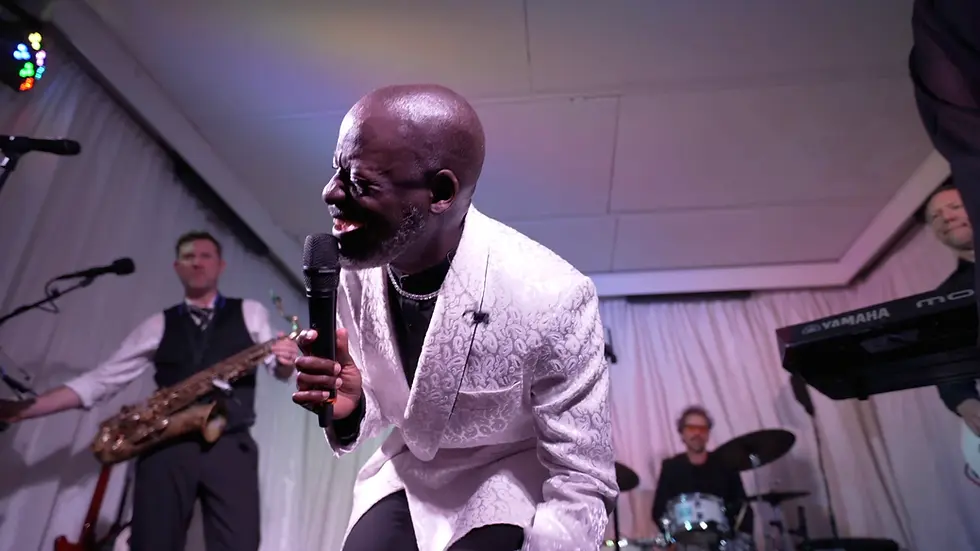
A live band performing these songs creates a categorically different energy than a recorded playlist, which is why the right musical performance matters as much as the song itself.
At Uptown Drive, we track custom song requests across hundreds of weddings in Austin, Houston, Dallas, and San Antonio, and the patterns in this guide reflect what couples actually ask for.
Choosing your wedding songs feels personal, and it is. But there is also real data behind which songs fill dance floors, which ones make guests cry, and which ones a live band can transform from a recording into a full-room moment. Whether you are planning your first dance, your processional, or your late-night reception set, the rankings below will give you a grounded starting point.
This guide breaks down the top wedding songs by wedding moment, decade, and venue type, covering the gaps that most ranked lists skip entirely. You will also find practical guidance on how to use the same song across multiple parts of your wedding day, and what makes a live performance of these songs different from what you hear on Spotify.

What Is the Most Played Wedding Song Ever?
The most played wedding song ever, based on aggregated newlywed survey data, is "All of Me" by a leading contemporary artist. Released in 2013, the song topped first-dance request lists within a single wedding season and has not left the top position since. Annual wedding song surveys from various industry platforms have consistently placed it first across multiple consecutive years, making it the dominant answer to this question by any measurable standard.
What makes "All of Me" so persistently popular is its structural simplicity as a wedding song. The tempo is slow enough for a ballroom first dance, the lyrics speak directly to unconditional love without metaphor or abstraction, and the piano-led arrangement works equally well as a live performance and a recorded track. Couples across age groups and musical backgrounds can connect to it without feeling like they need to explain the choice to their guests.
For context, the runners-up in most-ever-played rankings include "Can't Help Falling in Love" and "At Last" by Etta James. "Can't Help Falling in Love" received a significant resurgence after the 2022 film "Elvis" and the 2023 film "Priscilla" brought the song back into mainstream cultural conversation, pushing it up live-band request lists across the country.
"At Last" occupies a specific emotional register that the other songs do not. Its orchestral arrangement, the brass swell, the gospel-influenced vocal delivery, rewards a live band interpretation in a way that a recorded version simply cannot replicate. Couples who choose "At Last" for their first dance are often specifically thinking about what that song sounds like with real horns behind it.

What Is the 1st Wedding Song for the First Dance?
The number-one first-dance wedding song, by consistent ranking in newlywed surveys, is "All of Me" by a leading contemporary artist. First-dance songs are the most emotionally weighted musical choice of any wedding, and this song's direct lyrical address to a partner, combined with its unhurried three-and-a-half-minute runtime, makes it structurally ideal for the moment.
Here are the top 10 most requested first-dance songs, based on aggregated newlywed and live-band request data as of 2026:
"All of Me"
"Can't Help Falling in Love"
"Perfect"
"At Last" by Etta James
"Thinking Out Loud"
"A Thousand Years" by Christina Perri
"When a Man Loves a Woman"
"Make You Feel My Love" by Adele (Bob Dylan composition)
"I Don't Want to Miss a Thing"
"Bless the Broken Road" by Rascal Flatts
A few things stand out about this list. One contemporary singer-songwriter appears twice in the top five, which reflects how thoroughly that catalog has embedded itself in modern wedding culture. The original recording of "When a Man Loves a Woman" continues to outperform later covers in live request data, even though several versions exist. The emotional specificity of the original vocal is something wedding guests respond to, and a live band that can match that kind of raw, soulful delivery earns the room immediately.
If you are working with a live wedding band, the first-dance song choice matters beyond the lyrics. A band with a full horn section can take "At Last" somewhere a DJ cannot. A band without one probably should not attempt it.
What Is the Most Popular Wedding Song Right Now?
The most popular wedding song right now, as of 2026, is still "Can't Help Falling in Love" for first dances, with "Lover" by Taylor Swift and "Die With a Smile" by Lady Gaga and a featured collaborator emerging strongly in reception sets. The streaming era has accelerated song cycles, meaning a track can surge into wedding playlists within months of a film release or viral moment.
Here is what the current landscape looks like by wedding moment:
Wedding Moment | Current Top Song | Artist | Why It Works Now |
Processional | Canon in D | Pachelbel | Classic, instrument-only, timeless for any venue type |
First Dance | Can't Help Falling in Love | Classic catalog artist | Film-driven resurgence in 2022-2023, genuine emotional weight |
Parent Dances | My Girl | The Temptations | Cross-generational appeal, easily recognized by older guests |
Reception Opener | Uptown Funk | Contemporary pop artist | Immediate tempo shift, signals the party has started |
Dance Floor Peak | Don't Stop Me Now | Queen | Arena-tested crowd response, works across every age group |
Last Dance | Don't Want to Miss a Thing | Classic rock artist | Emotional closure, broad recognition among guests 30 and up |
One pattern Uptown Drive sees consistently across Texas wedding markets: the reception opener is more strategically important than most couples realize. The song that transitions the room from dinner to dancing sets the energy for the entire night. A song with a slow build, like "Signed, Sealed, Delivered" by Stevie Wonder, gives a live band room to ramp up. A track like "Uptown Funk" hits immediately and demands a crowd response. Choose based on your guest demographic, not just your personal preference.
What Are the Top 3 Wedding Songs?
The top 3 wedding songs, considering all moments of the wedding day combined, are "All of Me", "Can't Help Falling in Love", and Wagner's Bridal Chorus (the traditional processional piece). Each of these three songs dominates a distinct wedding moment: first dance, post-ceremony first dance (or secondary use), and the aisle walk respectively.
Understanding why these three songs have held their positions for years reveals something useful about what makes a wedding song work at the highest level.
Why "All of Me" Stays at the Top
"All of Me" succeeds because it does exactly one thing exceptionally well: it articulates unconditional love in language any guest can follow. There is no metaphor requiring interpretation, no cultural reference that dates the song, and no bridge that dramatically changes the emotional register. For a live band, it is also genuinely enjoyable to perform. The piano voicing, the controlled dynamic build, and the lyrical phrasing give vocalists room to add emotional texture without overloading the arrangement.
Why "Can't Help Falling in Love" Has Returned
This song's recent climb owes a direct debt to the 2022 biopic "Elvis" and the 2023 film "Priscilla," both of which returned the song to mainstream cultural awareness. Film-driven song resurgences are a real phenomenon in wedding music: when a song appears in a significant cultural moment, couples who were teenagers or young adults during that moment carry it forward into their wedding planning years. Expect "Can't Help Falling in Love" to remain a top-five request through at least 2027.
Why Wagner's Bridal Chorus Remains Irreplaceable
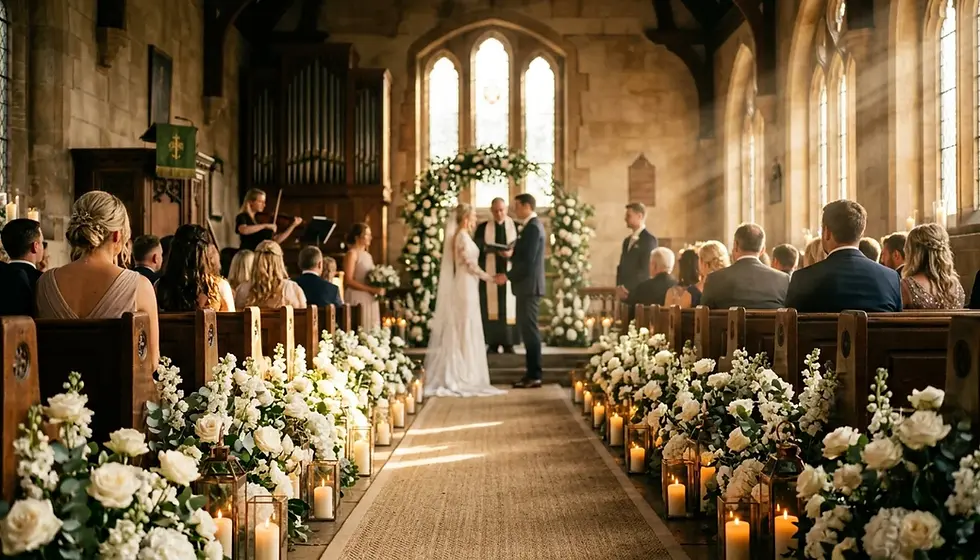
Wagner's Bridal Chorus is the processional standard for traditional church and ballroom ceremonies, and its staying power comes from its immediate recognizability. Every guest in the room knows what that opening phrase means: the bride is walking. No other piece of music carries that specific signal. A live string quartet or a full band playing it live adds a dimension that a recording from speakers never achieves.
How Has the Most Popular Wedding Song Changed by Decade?
The most popular wedding song has shifted significantly by decade, reflecting changes in mainstream music, cultural influence, and how couples discover and choose songs. Understanding this pattern helps you see why certain songs hold their positions for years while others peak and fade quickly.
Decade | Dominant First-Dance Song | Artist | What Defined the Era |
1980s | Always and Forever | Heatwave | R&B ballads dominated; live bands essential for texture |
1990s | I Will Always Love You | Whitney Houston | Power ballads; vocal performance was the centerpiece |
2000s | From This Moment On | Shania Twain | Country crossover appeal; broad demographic reach |
2010s | All of Me | Contemporary singer-songwriter | Singer-songwriter era; piano-led simplicity over production |
2020s | Can't Help Falling in Love | Classic catalog artist | Nostalgia cycle; film culture reactivating catalog tracks |
The shift from the 2000s to the 2010s is particularly instructive. Country crossover tracks dominated early-2000s wedding playlists because they had broad family appeal: grandparents, parents, and younger guests could all recognize Shania Twain. The 2010s moved toward singer-songwriter authenticity, where the arrangement stripped back to piano and voice. "All of Me" is the clearest expression of that aesthetic.
The 2020s pattern is more complex. Streaming platforms and short-form video have shortened song cycles dramatically, meaning a song can trend into wedding playlists within weeks of going viral. But the very top of the first-dance list has actually stabilized around older, pre-streaming catalog tracks. Couples planning weddings in 2026 are pulling from a deeper catalog pool than any previous generation had access to, and many are deliberately choosing songs from decades before they were born.
For couples working through a Texas wedding playlist, regional taste also shifts the decade patterns slightly. Country and gospel tracks hold their ground in Texas markets longer than in, say, San Francisco or Denver.
Does the Number-One Wedding Song Change by Venue Type?
The most popular wedding song does shift meaningfully by venue type, because the acoustic environment and guest expectations differ enough to make certain songs a better fit for specific settings. A song that lands perfectly in a barn with exposed wooden beams and natural reverb may feel thin in a hotel ballroom with high ceilings and professional sound reinforcement.
Church and Traditional Indoor Venues
Traditional church weddings and formal indoor ballrooms favor processionals with genuine orchestral gravity. Wagner's Bridal Chorus works because it was composed for exactly this acoustic environment: slow, stately, and designed to project through a large reverberant space. For first dances in formal ballrooms, "All of Me" and "A Thousand Years" lead request lists. Both songs have long, slow-building arrangements that reward a large, well-lit room.
Barn and Rustic Outdoor Venues
Barn venues, common throughout the Texas Hill Country around venues like Stonehouse Villa in Jonestown or Gruene Hall in New Braunfels, create a different musical dynamic. The wood and stone architecture gives live brass a natural warmth that hotel sound systems cannot replicate. Country-adjacent tracks move up the priority list in these settings: "Bless the Broken Road" by Rascal Flatts, "Faithfully" by Journey, and "Can't Help Falling in Love" perform exceptionally well. And for reception energy, barn crowds respond strongly to the kind of high-energy set that opens with a recognizable anthem and builds through Motown into current pop.
Backyard and Intimate Garden Venues
Smaller, more intimate settings favor acoustic arrangements and songs with softer dynamic ranges. For backyard receptions, stripped-down versions of popular songs often work better than their recorded counterparts. A single vocalist with a pianist performing "Make You Feel My Love" in an outdoor garden setting creates more emotional impact than a full-band version would in the same space.
Hotel Ballrooms and Urban Venue Spaces
Hotel ballrooms in Houston's Galleria district or Dallas's Uptown neighborhood expect a level of production that matches the venue's own polish. First-dance songs in these spaces tend toward the classic and recognizable: "At Last," "The Way You Look Tonight," and "Fly Me to the Moon" hold up in formal ballroom settings because their arrangements were built for exactly that kind of room. And a live band with full brass, like the lineup Uptown Drive brings to ballroom events, can play those arrangements at full scale without a DJ's limitations.
How Should You Use the Same Song at Multiple Points in Your Wedding?
Using the same song at multiple moments in your wedding day is possible, but it requires intentional arrangement choices to avoid repetition feeling accidental. Specifically, "All of Me" and "Can't Help Falling in Love" are both frequently requested for the processional, the first dance, and occasionally the last dance of the evening. Here is how to make that work without losing impact.
Processional vs. First Dance Arrangements
If you want "All of Me" for both your processional and your first dance, the arrangement must change between the two moments. For the processional, request an instrumental version at a slightly slower tempo. The absence of vocals shifts the emotional register from romantic to ceremonial. For the first dance, restore the full vocal arrangement and let the lyrical directness do its work. A live band can execute this distinction naturally; a DJ playing the same recording twice cannot.
First Dance vs. Last Dance
Some couples close their reception with the same song they used for their first dance. This works best when the song has enough emotional weight to feel like a bookend rather than a repetition. "Can't Help Falling in Love" is the strongest candidate for this approach because its closing lyric structure signals finality. Request it as a slower, more intimate arrangement for the last dance compared to the fuller version at the first dance.
At Uptown Drive, we have helped couples navigate exactly this kind of arrangement planning for weddings across Houston, Dallas, and Austin. The key is communicating the different emotional functions of each moment to your band well in advance so the arrangements can be prepared specifically.
Cocktail Hour Instrumental Versions
A third approach: use your first-dance song as an instrumental during the cocktail hour, building low-level familiarity before the full vocal version at the first dance itself. Guests who recognize the melody during cocktails feel an emotional reward when the full song arrives later. This works particularly well for couples whose first-dance song is meaningful to their relationship specifically, not just culturally familiar.
For more on structuring your walk-in and ceremony moments musically, our guide to wedding walk-in music covers the timing and arrangement decisions in detail.
What Makes a Live Band Performance of the Number-One Wedding Song Different?
A live band performance of any top wedding song is different from a recorded version in one specific, measurable way: the band responds to the room. A recording plays the same every time. A live performance adjusts tempo, volume, and emotional intensity based on what the couple and guests are doing at that exact moment. This is the practical argument for live music at weddings, not a philosophical one.
Take "All of Me" as a specific example. The recorded version runs three minutes and thirty seconds at a fixed tempo. A live band performing it can extend the outro if the couple is still dancing and clearly not ready for the song to end. A skilled vocalist can pull back to near-silence on the bridge to create a moment of genuine intimacy in the room. A drummer can add a subtle crescendo into the final chorus that gives the moment an emotional peak the studio recording never reaches. These are real, concrete differences that the couple and their guests feel in the room.
For songs that rely heavily on brass, the gap is even wider. "At Last" without real horns loses the harmonic richness that makes the opening bars immediately recognizable as something special. "When a Man Loves a Woman" delivered by a vocalist backed by a full live band rather than a backing track carries a weight that changes how the room responds.
The practical implication for couples in 2026 is straightforward: if you care about the specific sound of your first-dance song, a live band should be on your shortlist. If the song matters enough to choose it over hundreds of alternatives, it deserves a performance that can match the emotion you are associating with it. Our team at Uptown Drive regularly helps couples think through which songs are most transformed by a live arrangement versus which ones are genuinely well-served by a recorded version.
For couples exploring what live performance options look like in the Austin area specifically, the Austin wedding band page covers lineup details, genre range, and the Certified Original Lineup format that guarantees the musicians you audition are the ones who show up on your wedding day.

How Do You Build a Complete Wedding Day Song List?
Building a complete wedding day song list means assigning music to every distinct moment of the day, not just the first dance. Most couples underplan the ceremony music and over-focus on reception playlists. A structured approach covers six moments: the prelude, the processional, the ceremony itself (if music is used), the recessional, the cocktail hour, and the reception. Each moment has different musical requirements.
Step 1: Lock the Processional and Recessional First
The processional and recessional are the two moments where every guest is paying full attention to the music. Choose these before anything else. Wagner's Bridal Chorus remains the most traditional processional choice. For couples wanting a modern alternative, "A Thousand Years" by Christina Perri works well as an instrumental arrangement. For the recessional, upbeat and joyful: Stevie Wonder's "Signed, Sealed, Delivered" or Ben E. King's "Stand By Me" send guests into cocktail hour with the right energy.
Step 2: Choose Your First Dance Song Based on Arrangement, Not Just Lyrics
Once you have your processional locked, choose your first-dance song with the performance arrangement in mind. Ask your band directly: can you perform this song with the instrumentation it requires? A song that needs strings may not be deliverable by a band without a string player on roster. Know what you are asking for before you commit.
Step 3: Build the Reception Playlist Around Guest Demographics
Reception playlists should account for every age group at the table. A typical Texas wedding in 2026 covers three generations of guests. Motown handles older guests (50 and up) better than almost any other genre. Current pop and hip hop carries the under-35 guests. Classic rock serves as the bridge. If you are working with a multi-genre live band, give them this demographic framework rather than a rigid setlist, and let them read the room.
For more on structuring the reception entertainment beyond just the song list, the wedding music alternatives guide covers creative approaches that go beyond a standard DJ-or-band decision.
Frequently Asked Questions About Wedding Songs
What is the number-one song played at weddings overall?
"All of Me" is the most played song at weddings overall, based on consistent placement at the top of newlywed first-dance surveys across multiple years. Various annual wedding song industry surveys have reflected this pattern repeatedly. Its lyrical directness, manageable tempo, and piano-led arrangement make it suitable for nearly every venue type and guest demographic.
What is the most played processional song at weddings?
Wagner's Bridal Chorus, commonly known as "Here Comes the Bride," is the most played processional song at weddings with a traditional or religious ceremony format. For modern and non-denominational ceremonies, "A Thousand Years" by Christina Perri and Pachelbel's Canon in D are the leading alternatives. The choice often depends on venue type and whether a live ensemble is performing.
Has the most popular first-dance song changed in 2026?
As of 2026, "Can't Help Falling in Love" has climbed significantly in first-dance requests, fueled by the 2022 film "Elvis" and the 2023 film "Priscilla" returning the song to cultural prominence. "All of Me" retains the top position in most aggregate survey data, but the gap between first and second place has narrowed meaningfully compared to five years ago.
What reception songs get guests on the dance floor fastest?
Songs with an immediately recognizable opening measure and a tempo above 120 BPM move guests to the dance floor fastest. "Uptown Funk," "Don't Stop Me Now" by Queen, and "September" by Earth, Wind and Fire consistently produce fast crowd response in live-band reception sets. The key is not just the song itself but the transition: how a live band moves from dinner music into the first high-energy track determines whether guests feel invited onto the floor or startled into it.
Should I request the number-one wedding song or choose something personal?
Choose something that matters to you over a song that ranks well in surveys. The most played songs are most played because they are safe choices, not necessarily the most meaningful ones. If a less-known song carries genuine significance for your relationship, a skilled live band can arrange and perform it with the same emotional impact as any top-10 track. Communicate the song's importance to your band so they understand the weight of the performance.
Can a live wedding band learn a custom song not on their standard list?
Most professional live wedding bands can learn a custom song request with adequate advance notice, typically four to eight weeks before the event date. The feasibility depends on the song's instrumentation requirements and the band's genre range. A multi-genre band like Uptown Drive, which covers pop, hip hop, gospel, big band, and rock, can accommodate a wide range of requests. Submit custom song requests as early as possible and confirm the arrangement details in writing with your band.
How many songs should I plan for a four-hour wedding reception?
A four-hour wedding reception typically requires planning for 40 to 60 songs, depending on average song length and the pacing of the evening. A live band playing full arrangements may cover fewer songs per hour than a DJ with instant transitions, but the individual performances carry more weight. Focus on identifying eight to twelve must-play songs and communicating those as non-negotiables, then trust your band's expertise for the surrounding set.
What is the best last-dance song to close a wedding reception?
The best last-dance songs combine emotional resonance with broad recognizability so that even guests who have been at the bar all night feel the moment. "Don't Want to Miss a Thing," "Can't Help Falling in Love," and "New York, New York" by Frank Sinatra are among the most reliable closers across venue types. The song should feel like a natural conclusion, not an abrupt stop, so choose something with a graceful outro that a live band can extend or fade to the room.
What Is the Right Wedding Song for You? A Practical Conclusion
The number-one song played at weddings is "All of Me" for first dances, Wagner's Bridal Chorus for the processional, and a rotating cast of high-energy crowd favorites for the reception. These rankings reflect real survey data from thousands of couples and live-band request patterns across multiple years and markets.
But rankings are a starting point, not a prescription. The most played song is the most played because it is the safest choice. Your wedding is the one event where the safest choice and the most meaningful choice should be the same song. Use this guide to understand what works structurally in each wedding moment, then choose the song that belongs to your relationship specifically.
If you are planning a wedding in Austin, Houston, Dallas, San Antonio, or anywhere else in the country and want to think through how your song list would work in a live performance context, Uptown Drive is built for exactly that conversation. The band performs across all the genres that appear in these rankings, from classic ballads to current pop to gospel and big band, and every custom song request gets a real arrangement built around the couple's specific moment.

If you are ready to hear what the top wedding songs sound like with a live band behind them, reach out to Uptown Drive to check availability for your wedding date and request a quote for your event.


Comments